
MIT Graduate Students Defeat Discriminatory Dues Demands From Radical Campus Union
The following article is from the National Right to Work Legal Defense Foundation’s bi-monthly Foundation Action Newsletter, November/December 2024 edition. To view other editions of Foundation Action or to sign up for a free subscription, click here.
Union must cease forced dues, inform thousands of MIT graduate students of right to defund union politics
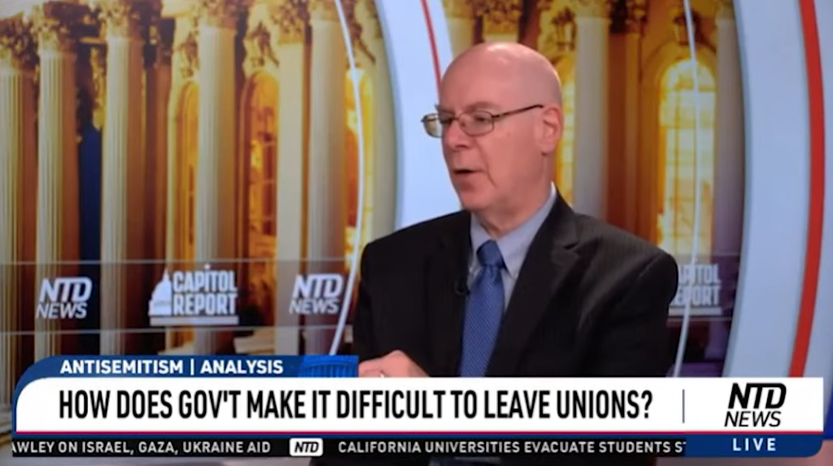
Foundation staff attorney Glenn Taubman, who aided the MIT graduate students in their legal victory, told NTD News his phone is “ringing off the hook” because university students and faculty nationwide are seeking ways to defund radical campus unions.
BOSTON, MA – “Jewish graduate students are a minority at MIT. We can’t remove the [Graduate Student Union (GSU)] or disabuse it of its antisemitism. But we also can’t support an organization that actively works toward the eradication of the Jewish homeland, where I have family living now.”
These were the words MIT Ph.D. student Will Sussman used to describe his, and other graduate students’, battle against radical union bosses at his campus, both in a Wall Street Journal op-ed and in June testimony before the U.S. House Committee on Education and the Workforce. GSU union officials gained the legal privilege to force MIT graduate students to pay dues or lose their academic work thanks to biased rulings by the National Labor Relations Board (NLRB) under both President Biden and President Obama. Since then, they’ve wasted no time in forcing even Jewish students with strong objections to the union’s anti-Israel agitating to fund their activities.
Students Battle Anti-Israel Sentiment Boosted by GSU Union Bosses
However, with free legal aid from National Right to Work Foundation staff attorneys, Sussman and his fellow Jewish graduate students Joshua Fried, Akiva Gordon, Adina Bechhofer, and Tamar Kadosh Zhitomirsky fought back against the GSU’s discriminatory dues demands. They each filed federal charges at the Equal Employment Opportunity Commission (EEOC), charging the GSU with denying them religious accommodations required by Title VII of the Civil Rights Act of 1964. Now they’ve won full accommodations that allow them to cut off all financial support for the union.
Separately, Foundation attorneys also filed federal unfair labor practice charges at the NLRB for Katerina Boukin, who objected on political grounds to the GSU’s ideological activity. Boukin sought to exercise her rights under the Foundation-won Communications Workers of America v. Beck Supreme Court decision, which lets workers who abstain from union membership opt-out of paying for the union’s political expenses.
In the wake of the October 7, 2023, attacks on Israel, Sussman and his fellow students experienced a massive wave of anti-Israel sentiment on MIT campus, including from GSU union chiefs.
“The blood had not yet dried when my colleagues at MIT declared, ‘Victory is Ours,’” related Sussman at a congressional hearing on anti- Semitism in unions. “The full-time GSU staff organizer told NBC10 Boston, ‘Those who rebel against oppression cannot be blamed for rebelling against that repression.’”
GSU Union Backed Off Unlawful Demands After Foundation Intervention
Sussman, Fried, Gordon, Bechhofer, and Zhitomirsky each requested in early 2024 that GSU union officials provide them with religious accommodations to paying union dues based on their objections to union officials’ extremist beliefs. Under federal law, such accommodations vary, but often take the form of letting the objector divert the dues from the offensive union to a 501(c)(3) charity instead. The GSU union’s brazen response was that “no principles, teachings or tenets of Judaism prohibit membership in or the payment of dues or fees to a labor union” and that no religious conflict existed because one of the founders of GSU’s parent union was himself Jewish.
The GSU union backed down after Foundation staff attorneys filed EEOC anti-discrimination charges in response to the lack of accommodation. The students have secured full religious accommodations and will pay money to charities of their choice, despite initial pushback from union bosses. The charities include American Friends of Magen David Adom and American Friends of Leket.
Katerina Boukin’s NLRB case was spurred by her disagreements with the union’s political stances on Israel. She stated that she was deeply offended by GSU’s “opposition to Israel and promotion of Leninist- Marxist global revolution” and that “[t]he GSU’s political agenda has nothing to do with my research as a graduate student at MIT, or the relationships I have with my professors and the university administration.”
“[Y]et outrageously they demand I fund their radical ideology,” Boukin said.
Foundation-Won Settlement Informs Students They Can Defund ‘Marxist’ Union
Foundation attorneys won a settlement for Boukin that not only returned illegally-seized dues to Boukin, but also required GSU bosses to inform the entire MIT graduate student body of their rights to invoke the Beck decision.
GSU bosses were forced to declare by email that they will not restrict the ability of those who resign their union memberships to cut off dues payments for political expenses and pay a reduced amount to the union. This email notice went out to approximately 3,000 MIT students.
Legal Protections Should Protect Employees’ Right to Object on Any Grounds
“The Foundation-backed MIT graduate students who fought these legal battles have earned well-deserved victories. But defending basic free association rights shouldn’t require such complicated litigation,” commented National Right to Work Foundation President Mark Mix.
“This ordeal at MIT should remind lawmakers that all Americans should have a right to protect their money from going to union bosses they don’t support, whether those objections are based on religion, politics, or any other reason.”
Following Foundation Legal Arguments, Trump Fires Biden-Appointed NLRB Bureaucrats
The following article is from the National Right to Work Legal Defense Foundation’s bi-monthly Foundation Action Newsletter, March/April 2025 edition. To view other editions of Foundation Action or to sign up for a free subscription, click here.
Foundation constitutional lawsuit first to argue presidents can remove Board members
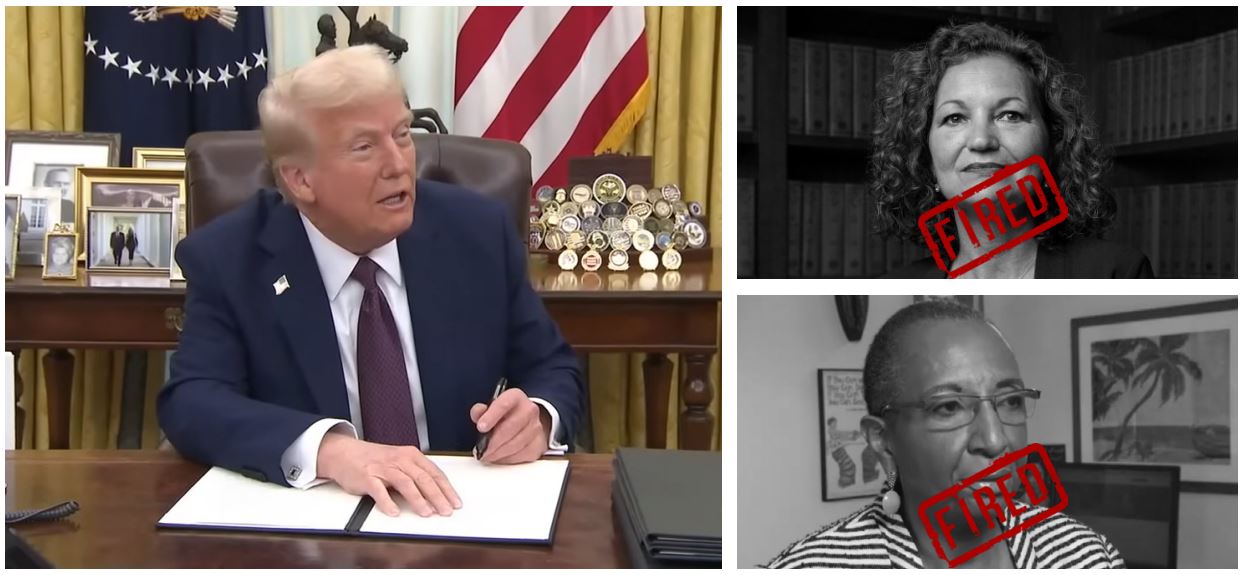
President Trump appears intent on ending union bosses’ reign at the NLRB. One of his first actions was to axe Jennifer Abruzzo and Gwynne Wilcox, both ex-union bosses who constantly sought to beef up their cronies’ powers over employees.
WASHINGTON, DC – Joe Biden, a career lackey of Big Labor union bosses, spared no moment of his administration ensuring that his cronies at the top of America’s largest unions gained power at the expense of independent-minded workers.
Only minutes after being inaugurated in 2021, he began setting the stage for a Big Labor takeover of the federal government: He immediately fired Peter Robb, the general counsel for the National Labor Relations Board (NLRB) during Donald Trump’s first term. With Robb gone, Biden’s acting general counsel quickly quashed multiple National Right to Work Foundation-backed cases that would have otherwise received full NLRB consideration. When Biden filled the general counsel position, he picked Jennifer Abruzzo — a radical ex-Communications Workers of America (CWA) lawyer who was confirmed only because then-Vice President Kamala Harris broke a party-line deadlock in the Senate.
And Biden wasn’t finished. He filled two vacancies on the Board itself with Gwynne Wilcox and David Prouty — who had both worked for the radical Service Employees International Union (SEIU).
Biden’s crusade against worker freedom arguably culminated in the disastrous Cemex Construction Materials Pacific NLRB decision, which gave union officials the power to seize monopoly bargaining power in a workplace without winning a secret-ballot election among employees. The Biden Board also repealed key Foundation-backed reforms that (among other things) stopped union bosses from using so-called “blocking charges” alleging employer malfeasance to stop workers from voting in union removal elections they had requested.
Sudden End of Radical Biden Majority Creates Opportunities for Foundation Litigation
But, just a week after re-ascending to the White House, President Trump took immediate action to undo the damage to worker freedom caused by the historically-radical Biden NLRB. In late January, Trump took the crucial step of giving both Abruzzo and Wilcox the boot. That, combined with the fact that the Senate did not confirm Biden NLRB Chairman Lauren McFerran for another term, means Trump has the opportunity to appoint a pro-freedom majority to the Board before it considers any other cases.
“We hope that this signals the opening of a new chapter at the NLRB, where the agency will fulfill its statutory mandate to protect workers’ right to associate with unions if they choose, but will equally defend their right to refrain from all union activity,” commented National Right to Work Foundation President Mark Mix.
Trump Admin, Others Follow Foundation Lead in Arguing for Structural Board Change
By removing Wilcox, the Trump Administration is relying on arguments made in the Foundation’s groundbreaking cases challenging the structure of the NLRB. Foundation-backed Starbucks employees Ariana Cortes and Logan Karam filed the first-ever federal suit arguing that, as per the Constitution’s separation of powers principles, the president should be able to remove them at-will.
Cortes and Karam’s suit is currently pending at the D.C. Circuit Court of Appeals. Big Labor backers argue that board members like Wilcox have statutory protections that make them removable only in certain circumstances. But Board member protections are constitutionally questionable.
“President Trump made an excellent and decisive move to protect the freedom of American workers. Abruzzo’s and Wilcox’s track records were devastating for independent-minded employees,” observed Mix.
“We’re also encouraged by the Trump Administration’s apparent reliance on National Right to Work Foundation-backed workers’ cases to affirm the idea that NLRB members — like Wilcox — should be removable by the president at will. “The Foundation still has considerable legal work to do to reverse the damage done by the Biden NLRB, and removing a union partisan like Wilcox from the Board is just the first step towards restoring the rights and freedoms of workers opposed to union affiliation,” added Mix.
Austin Worker Files 5th Foundation-Backed Lawsuit Arguing NLRB Violates US Constitution
The following article is from the National Right to Work Legal Defense Foundation’s bi-monthly Foundation Action Newsletter, January/February 2025 edition. To view other editions of Foundation Action or to sign up for a free subscription, click here.
Case joins others for employees nationwide arguing Labor Board’s structure is illegal
Dallas Mudd helps connect people with the social services they need, and his and many other workers’ ability to do their important work shouldn’t be stymied because unaccountable NLRB bureaucrats are forcing union “representation” on them.
AUSTIN, TX – In November, Dallas Mudd, an employee for online social service coordination platform Findhelp, filed a federal lawsuit against the National Labor Relations Board (NLRB) on the grounds that the agency’s structure is unconstitutional. Mudd’s case, filed in the U.S. District Court for the Northern District of Texas, is the latest in a series of legal actions by National Right to Work Foundation staff attorneys for employees challenging the NLRB’s authority.
Mudd’s case comes after he filed a decertification petition with the NLRB, seeking a vote to remove the Office & Professional Employees International Union (OPEIU) from his workplace. However, NLRB officials blocked the vote, disenfranchising Mudd and his colleagues on the basis of unproven charges union bosses made against Findhelp. Mudd appealed the decision to the full NLRB in Washington, D.C., while also filing a federal lawsuit to challenge NLRB members’ removal protections.
Shortly after the lawsuit was filed, Mudd’s Foundation attorney also asked the Northern District Court of Texas to issue a preliminary injunction stopping the NLRB from adjudicating his appeal until the issue of the NLRB’s constitutionality is resolved. Mudd argues that he is suffering ongoing and irreparable harm by being forced to navigate a statutory process before an agency that he claims is unconstitutionally structured.
Constitutional Challenge: A Broader Legal Campaign
Meanwhile, in its own case against the NLRB, Findhelp has successfully secured an injunction against the NLRB in a federal district court making arguments similar to those raised by Mudd.
Mudd’s lawsuit follows four other constitutional challenges backed by the National Right to Work Foundation, targeting the NLRB’s structure. This includes a case for New York Starbucks employees Ariana Cortes and Logan Karam, who filed the first constitutional challenge to NLRB Board Member protections.
Their case is currently being briefed at the D.C. Circuit Court of Appeals, but since their groundbreaking lawsuit, numerous major employers have utilized the arguments first made in federal court by Foundation staff attorneys to challenge the radically pro-union boss BidenHarris NLRB.
“Independent-minded workers should not be forced to depend on biased agencies staffed by bureaucrats who exercise power in violation of the Constitution,” said National Right to Work Foundation Vice President Patrick Semmens.
“The Constitution does not permit a powerful federal agency to operate as the judge, jury, and executioner without proper oversight.
“Contrary to the wishes of Big Labor bosses, federal labor law is not exempt from the requirements of the U.S. Constitution,” added Semmens.
Michigan Security Guards Overwhelmingly Vote to End Union Bosses’ Forced-Dues Power
The following article is from the National Right to Work Legal Defense Foundation’s bi-monthly Foundation Action Newsletter, January/February 2025 edition. To view other editions of Foundation Action or to sign up for a free subscription, click here.
After Big Labor-backed Right to Work repeal, Michigan workers including security guards continue fighting forced dues

James Reamsma and his fellow security guards finally secured their right to stop their hard-earned money from going to UGSOA union bosses after a months-long legal battle. Such anti-forced-dues cases continue to increase in Michigan.
GRAND RAPIDS, MI – Ever since Michigan legislators repealed the state’s popular Right to Work law, Michigan employees have been turning to the National Right to Work Legal Defense Foundation to help them fight to protect themselves from union bosses’ forced-dues demands. In a long-running case, security guard James Reamsma and his colleagues at Triple Canopy Inc. not only ended union officials’ power to require union dues payments as a condition of employment, but also freed themselves of unwanted union ‘representation.’
With Foundation legal aid, the security guards organized a National Labor Relations Board (NLRB) “deauthorization election” to strip United Government Security Officers of America (UGSOA) Local 288 union officials of their power to compel union financial support.
Overwhelming Vote Against Forced Dues Triggers End of Unwanted ‘Representation’
Despite an overwhelming vote by participating workers against forced union dues, union lawyers’ delay tactics stalled final certification of the results until October. At that point, the dissenting security guards were officially free to cut off all union dues payments, as had been the case when Michigan’s Right to Work law was in place and all union financial support was strictly voluntary.
At that point, faced with the prospect that the vast majority of the guards would likely stop dues payments, UGSOA bosses announced they were ending their so-called “representation” at Triple Canopy. This means the security guards are now not only free of forced dues, but also of monopoly union representation they oppose.
“UGSOA union officials have threatened to have everyone who does not join the union fired,” Reamsma said soon after his case was filed. “Many of us are retired police officers, or military, working part time, supplementing our income by providing security for government buildings across Michigan. When Right to Work was in place, guards were never forced to join the union.”
In addition to the deauthorization petition, Reamsma filed unfair labor practice charges against UGSOA, citing illegal union dues demands. The charges note that union officials were violating his rights under the Foundation-won CWA v. Beck Supreme Court decision by denying Reamsma a required breakdown of how the forced-dues amount was calculated, and also by attempting to require that he let the union automatically deduct dues out of his paycheck. Those charges remain pending with the NLRB.
Despite a vast majority of Michiganders — including those in union households — expressing support for Right to Work, union boss partisans re-granted forced-dues powers to Michigan union officials in 2023.
Foundation attorneys filed more than twice the number of cases for Michigan workers in 2024 (the year the repeal went into effect) than through all of 2023. That increase includes a number of deauthorization cases. In states that lack Right to Work protections, like Michigan does currently, the only way that workers can end union bosses’ pay-up-or-be-fired dues demands is by voting as a majority against forced dues in a “deauthorization election” or by voting to remove the union completely.
Often workers may prefer to end union “representation” entirely, but union-backed NLRB rules severely limit when decertification votes can be held, including for up to three years when a forced-dues union contract is in place. As a result, workers often turn to deauthorization to cut off union dues payments in order to incentivize union bosses to leave completely, as happened with James Reamsma and his coworkers.
Fight Against Forced Dues in Michigan Continues
“Mr. Reamsma’s situation shows the kind of greedy gamesmanship union officials can engage in without Right to Work,” commented National Right to Work Foundation President Mark Mix.
“As soon as Reamsma and his coworkers had gone through the complex process of voting to strip them of their forced-dues power, union officials immediately fled the workplace — almost as if they were only there to collect dues from workers who had no choice but to pay up to avoid termination.
“While we are proud to assist Michigan workers in navigating these challenges, cases like these show why it was such a mistake to repeal Michigan’s popular Right to Work law to begin with,” added Mix.
New York Farmworkers Seek to Challenge ‘Card Check’ & Uproot UFW Union Bosses
The following article is from the National Right to Work Legal Defense Foundation’s bi-monthly Foundation Action Newsletter, January/February 2025 edition. To view other editions of Foundation Action or to sign up for a free subscription, click here.
Farmworkers fight union argument that New York labor law lets union bosses trap workers forever
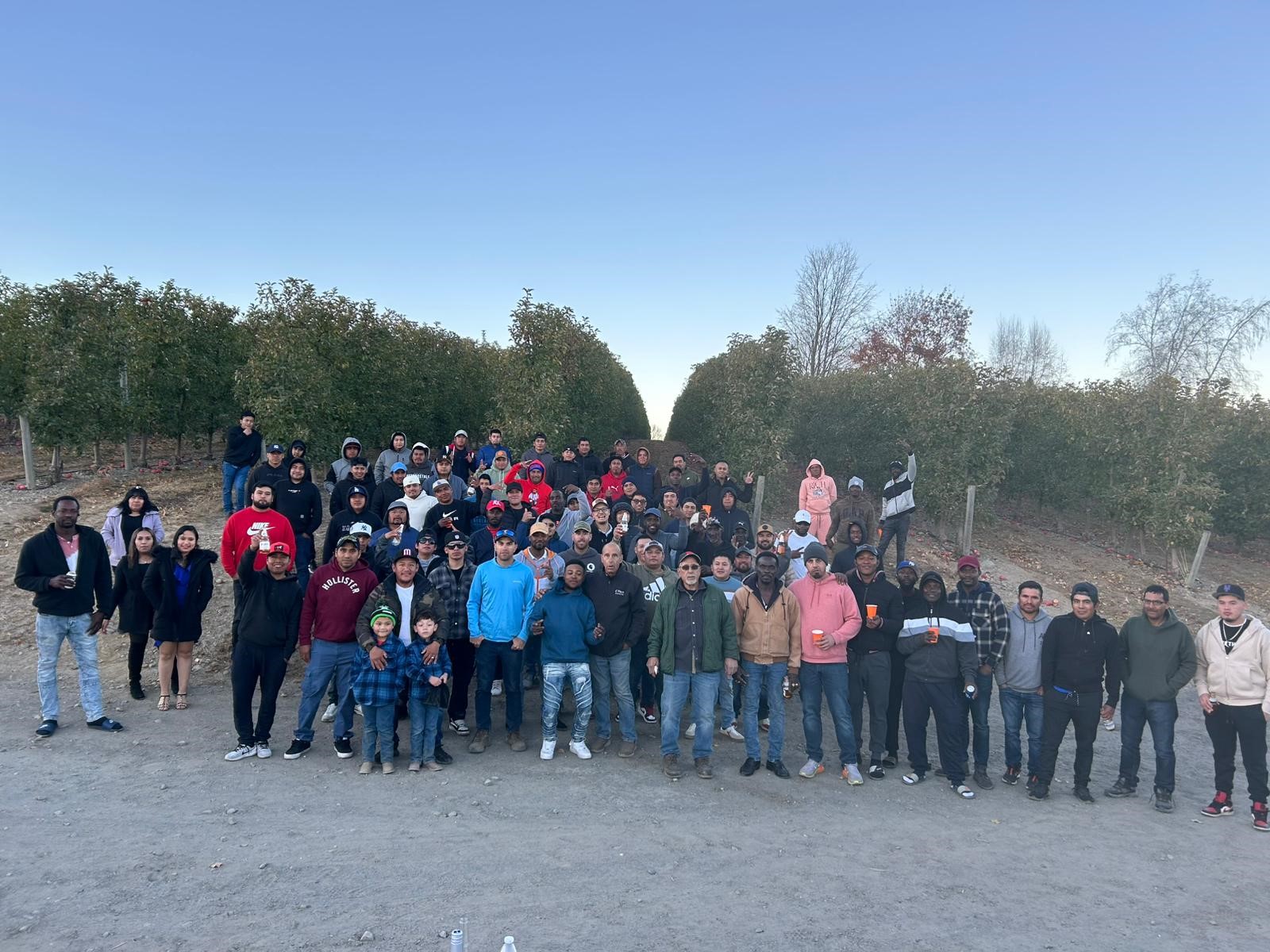
Porpiglia Farms workers, who were targeted by an aggressive UFW ‘card check’ campaign against the farmworkers, are banding together to vote the union out and ensure that union officials reap what they have sown.
MARLBORO, NY – In 2020, the New York State Assembly passed a Big Labor-backed law that granted union officials sweeping new powers to impose their monopoly bargaining control over the state’s farmworkers. Since New York is one of 24 states that lacks a Right to Work law, the law authorizes union bosses to force farmworkers to pay union dues or else be fired.
But that’s not all: New York labor law went even further by mandating “card check” organizing, in which union officials deny workers a secret ballot union vote and instead claim majority support by submitting cards ostensibly showing worker support. These cards are often collected through pressure tactics, intimidation, or even threats.
But even that dramatic increase in power over the agricultural sector and agricultural workers is not enough for United Farm Workers (UFW) union officials.
UFW tyrants are advancing the cynical argument that, under New York law, workers can be forced into union ranks but can never escape forced unionism. They argue this to counter a recent National Right to Work Foundation-backed union decertification case for employees of Porpiglia Farms, an apple farm in the Hudson Valley of New York.
NY Fruit Farmworkers Seek Union Ouster After ‘Card Check’
Porpiglia employee Ricardo Bell submitted a petition last year in which he and his coworkers asked the New York Public Employment Relations Board (PERB) to hold a vote at the orchard on whether to remove the UFW. (Despite its name, PERB is responsible for enforcing labor law in both New York’s public and agricultural sectors.)
In late 2024, Foundation attorneys filed a brief for Bell countering union officials’ absurd argument that one card check drive should lock employees in a union forever. Additionally, more Foundation-backed decertification cases are sprouting up in both New York and other Big Labor-dominated states for farmworkers who are rejecting UFW officials’ card check schemes.
Brief Challenges Theory That Workers Have No Right to Remove Incumbent Union
Bell filed his decertification petition with Foundation legal aid after UFW union officials seized power at his workplace through a hasty card check unionization drive. His newest filing attacks union bosses’ contention that once a union is certified as the monopoly union “representative” of a work unit, there can be no option to remove it.
“[New York labor law] does not indicate that employees have a single chance at self-organization,” the brief says. “If that were the case, the very action of choosing a representative under [New York labor law] would deprive employees of the ability to exercise [their rights] in perpetuity….”
Foundation-Backed Workers Battle UFW ‘Card Checks’ Across Country
Since Bell’s filing, Foundation attorneys have also assisted in a union decertification effort for workers at Cherry Lawn Fruit Farms near Rochester, NY, who were targeted by a similar UFW card check campaign. These two groups of New York farmworkers join Foundation-backed employees of Wonderful Nurseries in California in challenging the UFW’s tactics.
Wonderful Nurseries workers still have multiple unfair labor practice charges pending against UFW bosses for deceptive behavior during an early 2024 card check drive. The charges detail UFW agents lying about the true purpose of cards that they collected from workers, and harassing workers who now back an effort to vote the union out.
“The aggressive and often demeaning tactics that UFW union officials use to seize control over agricultural workers show clearly why ‘card check’ is a bad idea in the agricultural sector, the public sector, and in any sector,” commented National Right to Work Foundation Vice President and Legal Director William Messenger. “UFW officials are arguing that workers should have little or no chance at all to challenge a union’s ascent to power by this process.
“The idea that workers have no ability to eject a union once it is installed in power further demonstrates that this is not about workers’ choices at all, only about union bosses’ power over workers, even when workers overwhelmingly want nothing to do with union bosses’ so-called ‘representation,’” added Messenger.
Philly-Area Manufacturing Employees Triumph Over UAW Intimidation Campaign
The following article is from the National Right to Work Legal Defense Foundation’s bi-monthly Foundation Action Newsletter, January/February 2025 edition. To view other editions of Foundation Action or to sign up for a free subscription, click here.
UAW bosses now required to attend federal training after trying to fire non-striking workers
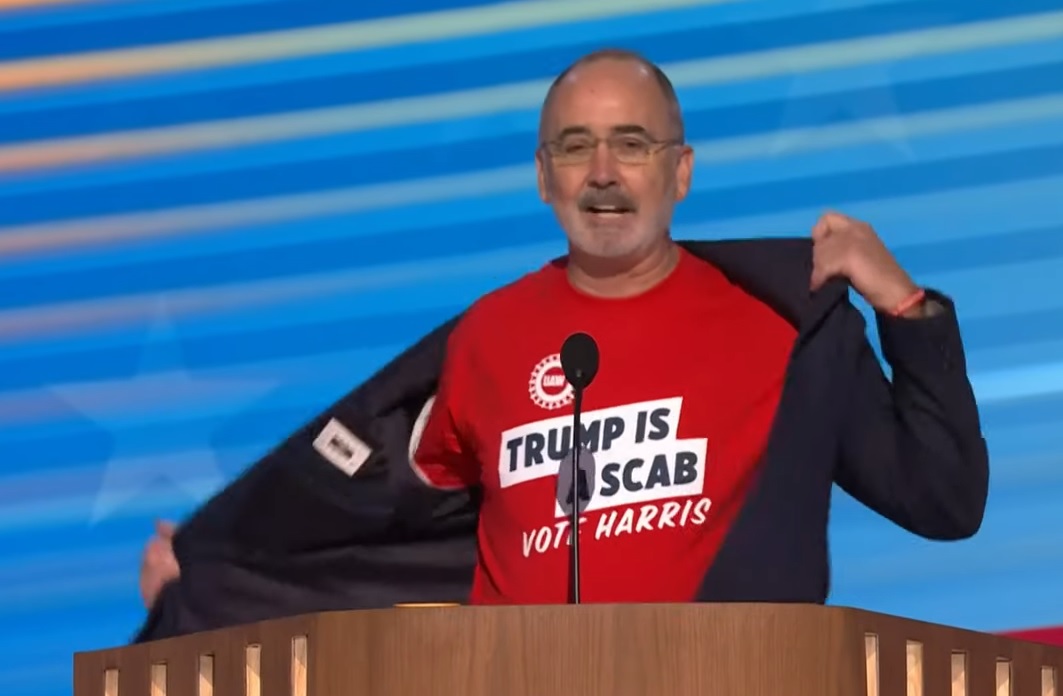
Despite an active federal corruption investigation, UAW President Shawn Fain and his underlings continue to push a radical political agenda using workers’ dues money while ignoring the rights of the rank-and-file employees union bosses claim to “represent.”
PHILADELPHIA, PA – It’s not particularly difficult to see why United Auto Workers (UAW) union officials are having trouble convincing workers that the union has their best interests in mind.
The union’s upper echelon is still reeling from a federal probe that hit about a dozen top union bosses with prison sentences for embezzling workers’ dues, and to this day it appears that UAW President Shawn Fain — a so-called “reformer” — is being scrutinized by federal monitors for manipulating his position to secure personal benefits.
But the corruption within the UAW goes far beyond the union’s top executives. Throughout 2024, National Right to Work Foundation-backed workers for auto accessory manufacturer Dometic fought illegal UAW demands that they strike or be fired.
UAW Union Used Mass Texts, Social Media to Bully Workers
In March 2024, seven Philadelphia-area Dometic employees filed unfair labor practice charges against the UAW Local 644 union, detailing that UAW bosses had ordered a strike and threatened to get fired anyone who decided to keep working.
Despite the employees’ resignation of their union memberships, UAW officials began internal proceedings against each of them soon after the strike began. Federal labor law forbids unions from imposing internal discipline on those who abstain from union membership.
The Dometic workers didn’t back down. With free Foundation legal aid, all the workers won settlements in October 2024 that fully vindicated their rights. UAW officials must now make postings correctly informing workers of their right to abstain from union activities, and the settlement even requires union chiefs to undergo mandatory training on the limits of “a union’s right to impose internal discipline,” among other topics.
As the workers’ legal battle dragged on, the Dometic workers continued to expose ugly details of the UAW’s intimidation campaign surrounding the strike. In April 2024, Dometic employee Mario Coccie filed a second round of charges against UAW Local 644 for a mass text message that threatened all Dometic employees — not just those who had filed charges against the union — with termination if they didn’t strike.
“The information in this text reveals union officials’ real intentions, which is to hurt anyone willing to stand up for themselves,” said Coccie at the time. “What is happening in this case is completely unjust.”
UAW officials also refused to respect Coccie and his coworkers’ rights under the Foundation-won CWA v. Beck Supreme Court decision, which prohibits union officials from requiring workers to pay for the union’s political expenditures just to keep their jobs. Because Pennsylvania lacks Right to Work protections for its private sector workers, UAW bosses can force workers to pay union fees as a condition of employment, but must abide by Beck.
Legal Privileges Enable UAW Corruption
In addition to the notice postings and required training, the Foundation-won settlement orders union officials to delete social media posts threatening workers who refused to strike.
“We’re proud to have helped Mario Coccie and his coworkers vindicate their rights,” commented National Right to Work Foundation Vice President Patrick Semmens. “But it has become all too clear that union corruption — which can take the form of anything from stealing millions in worker dues to intimidating workers to join a picket line — is only made easier when union bosses are granted more legal privileges.
“Policymakers need to protect workers’ freedom to cut off funding for union bosses who don’t serve their interests, and to fully abstain from union activities that individual employees do not see as in their own best interest,” Semmens added.
Amicus Briefs Boost Professors’ First Amendment Challenge to Union Monopoly Bargaining Power
The following article is from the National Right to Work Legal Defense Foundation’s bi-monthly Foundation Action Newsletter, November/December 2024 edition. To view other editions of Foundation Action or to sign up for a free subscription, click here.
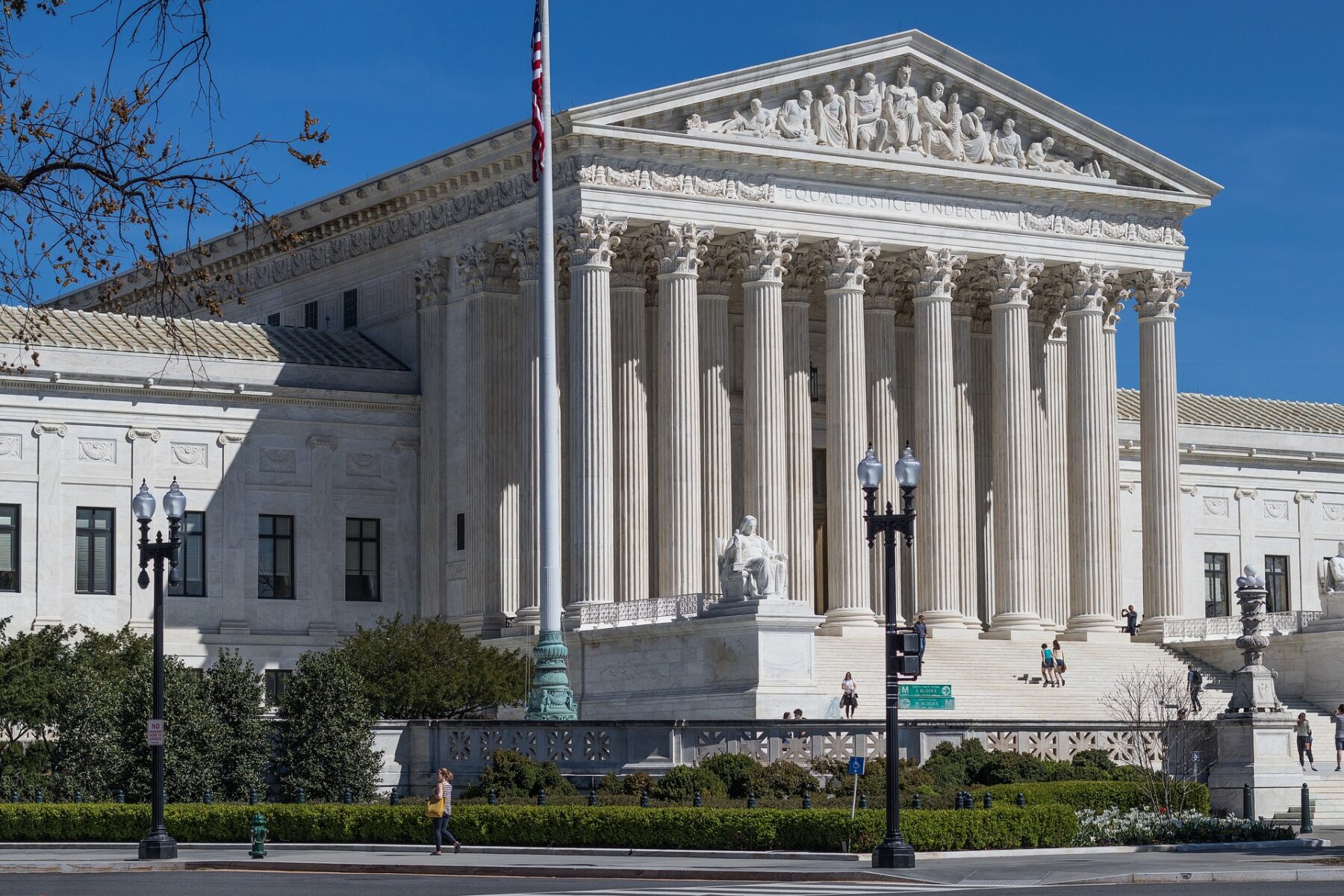
As reported in the previous issue of Foundation Action, City University of New York (CUNY) professor Avraham Goldstein and several of his colleagues have asked the U.S. Supreme Court to hear their First Amendment challenge to union monopoly power in the public sector.
The professors have had enough of Professional Staff Congress (PSC) union bosses’ attacks on Jewish culture and identity, and argue that New York State’s laws forcing them to associate with PSC and PSC officials’ so-called “representation” violate their constitutional rights.
Already, their petition before the Supreme Court is gaining traction: Since the Foundation-backed petition was filed in July, 11 briefs in support of the professors have rolled in from notable legal foundations, religious freedom advocacy groups, and legal scholars.
Additionally, in September, the Supreme Court took the step of ordering PSC and New York State officials to file a response brief. The Supreme Court will likely make a decision on whether to hear the case by early 2025.
Check out the Foundation’s website for breaking news in cases being litigated by Foundation staff attorneys.
AT&T Workers Nationwide Win Challenges to Unionization Imposed Through Card Check
The following article is from the National Right to Work Legal Defense Foundation’s bi-monthly Foundation Action Newsletter, November/December 2024 edition. To view other editions of Foundation Action or to sign up for a free subscription, click here.
Victories by AT&T workers in five states preceded Biden-Harris NLRB rule change to block secret ballot votes

See You, CWA: Marquita Jones (left), Samantha Cain (middle), and Matthew Gonzalez rallied their fellow AT&T workers to escape unwanted CWA unions.
WASHINGTON, DC – While the Biden-Harris National Labor Relations Board (NLRB) sought to upend NLRB rules designed to protect workers’ ability to vote out unwanted unions, AT&T workers across the country won a series of victories highlighting the importance of allowing workers to challenge coercive union card check unionization with secret ballot votes. The decertification victories all relied on the National Right to Work Foundation-backed 2020 NLRB “Election Protection Rule” (EPR), which was formally eliminated by the Biden-Harris Labor Board in September.
In five separate cases covering well over 1,000 workers, AT&T Mobility employees have successfully overturned Communications Workers of America (CWA) unionization imposed through the notorious “card check” process.
Under card check, union organizers bypass the secret ballot election process and instead collect cards face-to-face from employees that are then counted as “votes” for the union. Without the privacy of a secret ballot vote, many workers report being pressured, bullied, or threatened into signing, which is among the reasons why card check has long been recognized as inherently unreliable and abuse-prone.
Foundation-Backed 2020 Rule Let Over 1,000 AT&T Workers Nix Union Card Checks
The 2020 Election Protection Rule reformed several rules that union officials manipulate to trap workers under monopoly “representation,” including by giving employees a way to challenge card check unionization with a secret ballot election. Foundation staff attorneys assisted AT&T employees in five states to do that in advance of the Biden-Harris Labor Board’s cynical repeal of the rule.
First, in Tennessee, AT&T employee Denis Hodzic filed a petition signed by two-thirds of his coworkers in the unit seeking a secret-ballot vote to remove the CWA union, after CWA agents installed themselves over 100 AT&T In-Home Experts by card check. Initially CWA union officials argued the election should be permanently blocked because the union had already merged the workers into a larger bargaining unit with thousands of other AT&T workers.
CWA Bosses Capitulated to AT&T Workers
However, citing the Election Protection Rule, which gives workers at least 45 days to challenge a card check with a decertification petition, Foundation staff attorneys were able to win a ruling with the NLRB allowing the vote to proceed. At that point CWA officials chose not to even contest the vote, instead filing paperwork with the NLRB freeing the employees from CWA ranks apparently to avoid an overwhelming final vote against the union.
“The Election Protection Rule was essential for us to rely on as we went through the process of seeking resolution to our tricky situation,” Hodzic said of his situation. “The 45-day petition window needs to remain regardless of which group holds the majority position in Washington.”
Since then, with legal aid, around 1,000 additional AT&T Mobility employees in California, Louisiana, Mississippi, and Texas have all also successfully removed the CWA union following installation through card check. In all four states, once the decertification vote became inevitable, CWA officials simply conceded defeat rather than wait for the results of a formal decertification vote.
NLRB Repeal of Election Protection Rule Traps Workers in Union Ranks
Despite these efforts from independent-minded employees, the Biden-Harris NLRB formally repealed the Election Protection Rule in September, dramatically expanding union bosses’ ability to block employee-requested decertification votes.
As a result, now, when workers in Hodzic’s situation attempt to challenge a card check with a secret ballot decertification, the NLRB will automatically block their vote for up to one year after a card check, which opens the door to countless other union delay tactics.
“If these AT&T employees had filed their five decertification petitions after September 30th, they would have been trapped in a union they oppose for years and likely forever,” commented National Right to Work Foundation Vice President Patrick Semmens.
“This is yet another example of the Biden-Harris NLRB steamrolling the rights of independent-minded employees, so union bosses can expand their forced dues ranks. “Despite this setback for employee freedom, Foundation staff attorneys remain committed to helping workers trapped in union ranks they oppose,” added Semmens. “That includes helping them navigate the increasingly rigged NLRB system.”
Chicago 911 Operators Notch Another Janus Victory Over IBEW
The following article is from the National Right to Work Legal Defense Foundation’s bi-monthly Foundation Action Newsletter, January/February 2025 edition. To view other editions of Foundation Action or to sign up for a free subscription, click here.
Foundation attorneys stopped deceptive cycle that kept illegal dues flowing for months

Patricia Whittaker heard ridiculous excuses from IBEW union officials about how they couldn’t honor her Janus rights. But after teaming up with Foundation attorneys, she’s cut off dues to IBEW bosses.
CHICAGO, IL – Another 911 operator employed by the City of Chicago has successfully defended her First Amendment rights under the National Right to Work Foundation-won Janus v. AFSCME Supreme Court decision. Late last year, Operator Patricia Whittaker sought free Foundation legal aid after facing months of stonewalling from International Brotherhood of Electrical Workers (IBEW) Local 21 union officials, who refused to stop taking dues from her paycheck against her will.
Whittaker fought these dues seizures by invoking her First Amendment rights under Janus. Foundation attorneys argued and won the Janus case before the Supreme Court in 2018. The Supreme Court agreed with Foundation attorneys and ruled that union officials could not force public sector employees to pay union dues or fees as a condition of employment, and that union officials must obtain affirmative employee consent before deducting union dues from any public worker’s paycheck.
In October, following unfair labor practice filings by Foundation attorneys at the Illinois Public Employment Relations Board (PERB), IBEW union bosses abandoned their unconstitutional dues demands — and other outrageous behavior they had subjected Whittaker to.
IBEW Union Outrageously Claimed They Had No Power to Stop Dues Deductions
Whittaker faced much more than just illegal dues deductions during her ordeal. IBEW officials engaged in a deceptive cycle in which Whittaker was told to resolve the matter with her employer, while the employer directed her back to the union, resulting in continued dues deductions for over 10 months. In doing so, the charges maintained, union officials misrepresented the law by making it appear as if they were the “good guys” by remitting dues deducted by the City of Chicago through checks back to her and claimed that only the employer — not the union — had the power to end dues deductions.
This isn’t the first time IBEW 21 union officials have been caught imposing illegal dues practices on Chicago 911 employees. In June 2024, Rhonda Younkins also triumphed in her months-long legal battle to exercise her First Amendment right to stop all union dues payments to IBEW Local 21. IBEW Local 21 union officials stopped their violation of Younkins’ Janus rights only after Foundation attorneys filed charges at PERB on Younkins’ behalf.
Independent-Minded Workers Continue to Defend Freedom with Janus
The Janus decision’s impact continues to grow. Immediately following the ruling, nearly a half a million public employees stopped paying union dues, with many others following in subsequent years as litigation backed by Foundation attorneys continues to defend their rights.
“The behavior of IBEW Local 21 union officials highlight just how crucial it is for public employees to be aware of, and assert, their Janus rights,” said National Right to Work Foundation President Mark Mix.
“While we at the Foundation are proud to help more workers protect their hard-earned money from funding union bosses and union agendas they don’t support, it is unacceptable that it takes aggressive legal action just to force union officials to respect workers’ constitutional freedoms.”





