
Lead Advocate of Coercive “Card Check” Union Organizing Consolidating Power?
Following up on the internal power struggle within the SEIU union, the gnashing of teeth continues. Today’s San Francisco Chronicle says that a new letter from SEIU chief Andy Stern accuses his lead critic Sal Rosseli of misconduct. The article cites Rosseli and others:
"…said the allegations appear to be a prelude to a trusteeship, under which Stern would replace the union’s elected leaders with his own appointees."
Sounds like quite the consolidation of power. Stern is a leading proponent of pouring massive amounts of forced union dues into coercive "card check" union organizing, and the outcome of this power struggle could have serious implications for American workers victimized by such campaigns.
If you haven’t already, be sure to take a look at this video detailing the coercion inherent in union "card check" campaigns, and how the National Right to Work Foundation is helping employees fight back.
Unionization Elections Whether Employees Want Them or Not?
That’s just one of many propsed rule changes being suggested at the National Labor Relations Board. Late last week, the National Right to Work Foundation filed comments opposing the changes which would further undermine employees’ freedom to choose whether or not to unionize.
Under the proposed rules, colluding union officials and company officials could trigger a quick-snap unionization election even when no employees have expressed any interest. The proposed changes would also severely undermine employees’ ability to challenge any misconduct or unfair labor practices.
Additionally, an NLRB rubber stamp could be obtained despite strategic gerrymandering of bargaining units and even where no advance notice of the election is provided to employees.
Sounds like the proposed changes a real loser for employee free choice.
Another Week, Another U.S. Supreme Court Case
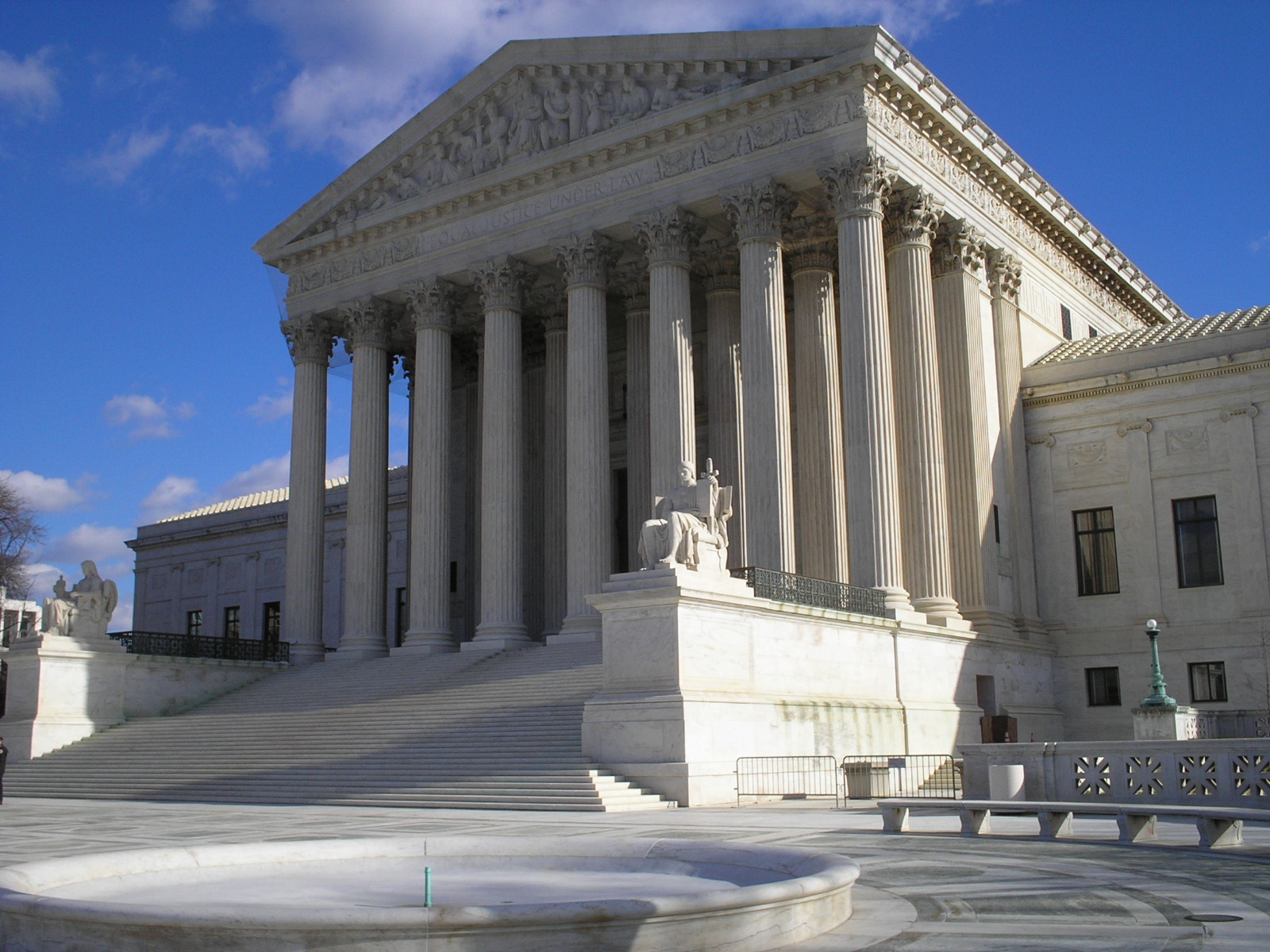

Adding the a string of cases supported by the National Right to Work Foundation, the U.S. Supreme Court took up another case Monday. At issue is whether a Ninth Circuit Court of Appeals decision that limited the applicability of an Idaho state law banning payroll deductions for union Political Action Committees (PACs) will stand. Foundation attorneys urged the High Court to take up the case alongside the Sutherland Institute and Utah Taxpayers Association.
Foundation Vice President Stefan Gleason told the AP earlier this week that:
"Payroll deduction should not be a constitutionally protected right. We feel it’s bad public policy to have government bodies essentially be bagmen for union political monies."
To read the full article, click here. To read more about the Foundation’s Supreme Court track record, click here.
The Union Bosses’ Goal: More Forced Dues Dollars

Carl Horowitz has an article up today at National Review Online about the SEIU union and its top boss, Andy Stern. The article plays up the supposed split in organized labor between the so-called “Change to Win” coalition (led by Stern’s SEIU) and the AFL-CIO over whether to emphasize politics and lobbying or more aggressive organizing through the abusive card check scheme.
Horowitz’s article deals mostly with the SEIU’s immigration policies, but the most important thing to take away is that both “Change to Win” and the AFL-CIO really have only one goal: sweeping more workers into their forced dues-paying ranks, and using card check to do it.
This is illustrated clearly by Horowitz who describes a secret sweetheart deal the SEIU struck to get employer assistance in forcing workers into union ranks:
In a secret 2003 agreement with California nursing-home chains — according to Bay Area alternative newspaper SF Weekly — the SEIU committed to: discouraging patients and their families from suing for negligence; and supporting a four-year, $2 billion increase in MediCal subsidies to nursing homes. In return for supporting these industry-backed measures, the union retained the right to organize other nursing homes.
In other words, whether pushing for the card check bill in Congress, or joining industry lobbying efforts in exchange for handing sweeping access to employees, the end is always the same: more forced dues dollars in the pockets of union bosses.
Video: Big Labor Opposes Freedom of Choice
Yesterday, Senate Democrats held hearings and called on Members of the National Labor Relations Board to speak about their views of the NLRB.
Member Wilma Liebman, one of the most fiercely pro-compulsory unionism members ever to sit on the National Labor Relations Board, testified about what she described as “a loss of confidence in the board and its processes.”
To understand what she means by that, watch the following video clip of her testifying about the NLRB back in December before a House committee. Not long after the four minute mark of the video, Liebman bemoans the fact that, according to her, the currently NLRB seems too preoccupied with “freedom of choice”:
“The Board has said for the first time that freedom of choice – which is to say the freedom to reject unionization – prevails in the statutory scheme over promoting collective bargaining.”
So there you have it: Big Labor’s real problem with recent NLRB decisions is that the Board is protecting freedom of choice too strongly, thus allowing workers to reject unionization.
Video: Employees Suffer Broken Windows, Slashed Tires, and Stalking for Refusing to Strike
View a new video by the National Right to Work Legal Defense Foundation about the often brutal intimidation that employees face for exercising their Right to Work.
Sadly, while these employees suffered greatly, others often face far worse retaliation for refusing to walk off the job during a strike.
WSJ: Repeal of Right to Work Laws High on Union Officials’ 2008 Agenda
Today’s Wall Street Journal points out that union officials are pouring upwards of a billion dollars, much of it in compulsory dues, into the 2008 election cycle. The goal? A sea change of American labor law.
"This is an all-in bet for them in 2008," says Mark Mix, president of the National Right to Work Committee, a group that fights down in the trenches against coercive union power. "As market cycles go, they’re in their peak, we’re in our trough, and they’re looking for a clear two-year run" in an all-Democrat Washington.
Then there’s the crown jewel:
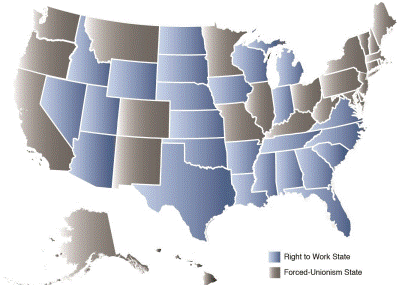
Tucked into the 1947 Taft-Hartley Act is a provision called 14(b), which allows for "right to work" states. Big Labor last took a run at deleting this section, and forcing more unionization, in the Johnson administration.
Aside from abolishing employees’ free choice of whether or not to join or pay dues to a union, wiping the current 22 state Right to Work laws off the map would deal a crushing blow to the American economy.
According to a recent study by the National Institute for Labor Relations Research, forced unionism cost the American economy upwards of $436 billion in GDP between 2000-2006 alone.
The yoke of compulsory unionism already takes a severe toll on states without Right to Work laws, the last thing America needs is to expand its reach.
“The Only Good Scab is a Dead Scab”
That’s what one person commented on YouTube about our latest video. Though sad, the sentiment is indicative of the mind set that led to such hostility against the employees in the video that simply exercised their Right to Work.
Misconceptions About Right to Work Laws and Unionization Rates
The Rocky Mountain News had an article this weekend on various proposed ballot initiatives in Colorado. The otherwise informative article concluded with this strange (and unsupported) sentence:
For the most part, states without right-to-work laws have higher levels of union participation, a statistic that some observers attribute to the popularity of unions rather than right-to-work laws.
The idea that the "popularity of unions" accounts for lower rates of union participation in Right to Work states, gets it entirely backwards and fails to understand just what a Right to Work law does.
Right to work laws do nothing to change the process through which a workplace becomes a union shop: a place where union officials have the power to forcibly represent every employee in the bargaining unit). Rather, they simply ensure that once a union is installed, no worker is forced to pay union dues as a condition of keeping or getting a job.
There are at least two ways that these Right to Work protections affect "union participation" rates:
- Voluntary Participation. The most obvious reason is that in Right to Work states unions can’t force employees to pay dues or be fired. This lets employees decide for themselves if they think the union is worth the dues they are being charged. So it should come as no surprise that when employees are actually given a choice, it drives down union participation.
- Big Labor’s Bottom Line. A second way in which Right to Work laws lower participation in unions is that they discourage (though not completely) Top Down union organizing. More and more drives for unionization are instigated by outside professional union organizers, as opposed to employee-led demands for unionization. But like the companies they try to organize, union officials are very aware of the bottom line, and they are always looking to maximize their revenue. Since for union bosses revenue means union dues, they realize that by targeting employers in states without Right to Work laws, they can maximize their haul because every worker – not just those who support the union – will be forced to pay up.
So contrary to what "some observers" say, there are at least two ways that protecting employees’ freedom to choose impacts union participation rates.
R.I.P. Charlton Heston, Supporter of the Right to Work
This weekend legendary actor Charlton Heston passed away.
Heston, former president of the Screen Actors Guild (SAG) union, was a rare union official who supported the Right to Work.
As recounted in this article, Heston also led a group of actors who started a campaign in the early 1980’s to inform their fellow actors of the right to refrain from formal union membership as won in the National Right to Work Foundation’s Abood case:
Mr. Heston also aroused the ire of union leaders in Hollywood when he and a group of conservative SAG actors — who called themselves Actors Working for an Actors Guild — led a movement to educate Hollywood union members to the fact that they had the right — as upheld by the Supreme Court — to opt out of their unions by declaring "financial core" status. In non-right-to-work states such as California, declaring financial core status gives workers in unionized industries the right to opt out of their union’s politics while still requiring them to pay that portion of union dues that go directly towards collective bargaining, contract enforcement and contract administration.
Later, Heston himself resigned his formal SAG union membership in protest of a racist stance by SAG union brass:
Mr. Heston put his principles into action in 1991 when he declared financial core status in Actors Equity to protest the union’s refusal to allow a white actor — Jonathan Pryce — to play the role of a Eurasian in "Miss Saigon" on Broadway. Mr. Heston, who had marched with Dr. Martin Luther King, called the union’s action "obscenely racist." He even flew to London to support an actor’s right to play any role without regard to race.
Charlton Heston was a champion of freedom who will be missed.
UPDATE: Here is video of Heston talking about the Right to Work principle from the Right to Work YouTube channel.





